

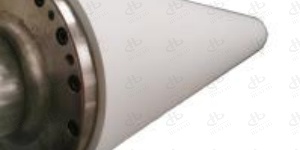
| Process Type | Hot Melt & Solvent-Based Prepreg |
| Resin Systems | Epoxy, BMI, Phenolic, Cyanate Ester |
| Reinforcement Materials | Carbon Fiber, Glass Fiber, Aramid Fiber |
| Roller Material | Forged Alloy Steel / Stainless Steel |
| Roller Diameter | Ø100–800 mm (Customizable) |
| Face Length | 300–6000 mm (Customizable) |
| Heating Method | Electric, Thermal Oil, Induction, Steam (Optional) |
| Surface Temperature | Ambient–250°C (Customizable) |
| Temperature Accuracy | ±1°C |
| Surface Finish | Mirror Polished |
| Surface Roughness | Ra ≤0.2 μm |
| Runout Accuracy | ≤0.02 mm |
| Dynamic Balance Grade | G2.5 (G1.0 Optional) |
| Surface Treatments | Hard Chrome, Ceramic, Tungsten Carbide, PTFE, DLC |
Ask any prepreg processor where final laminate quality is won or lost, and the answer usually points to the nip. The Heated Nip Roll occupies that position — after resin coating and metering — and its task is to apply heat and pressure simultaneously, bonding reinforcement fibers to resin films or coated carrier films into a single, consolidated prepreg.
Following the material through the nip. In hot melt prepreg manufacturing, epoxy resin is first coated onto a release film through the coating and metering system. That resin-coated film then enters the heated nip section together with carbon fiber, glass fiber, or aramid fiber reinforcement. Inside the nip, the Heated Nip Roll maintains an optimized processing temperature while applying uniform pressure across the entire web width. The resin flows evenly into the fiber architecture — the mechanism behind improved impregnation quality and stable resin content.
Why heat changes the outcome. A conventional pressure roller can press resin and fiber together, but it cannot lower resin viscosity at the moment of lamination. The Heated Nip Roll adds that thermal energy. The result is improved resin penetration, reduced air entrapment, better fiber wet-out, and more consistent laminate thickness — process effects that a cold nip simply cannot reproduce.
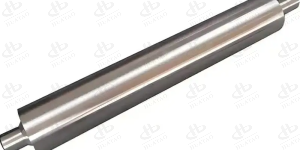
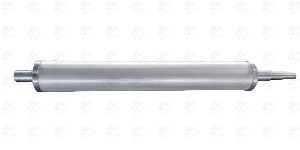
How the roller is built. Our Heated Nip Rolls are manufactured using forged alloy steel and precision CNC machining. Every roller undergoes high-accuracy grinding, mirror polishing, and dynamic balancing to ensure exceptional concentricity, minimal runout, and vibration-free operation during continuous high-speed production.
Heating technologies to match the process. Several options are available to meet different process requirements:
Electric resistance heating
Thermal oil heating
Electromagnetic induction heating
Steam heating (for selected applications)
Surface engineering for resin contact. The roller surface can be customized with hard chrome plating, ceramic coating, tungsten carbide coating, PTFE non-stick coating, or DLC coating to optimize wear resistance, resin release performance, and corrosion protection.
Whether integrated into new prepreg manufacturing equipment or retrofitted into existing production lines, our Heated Nip Rolls provide stable thermal performance, precise pressure control, and long-term operational reliability.
The Heated Nip Roll combines controlled temperature and pressure to produce consistent laminate quality.
Benefits include:
Improved resin flow
Better fiber impregnation
Uniform laminate thickness
Reduced void content
Stable resin distribution
The heating system maintains a stable roller surface temperature throughout production.
Advantages include:
Fast thermal response
Uniform surface temperature
Consistent processing conditions
Improved production stability
Repeatable product quality
Optional multi-zone temperature control is available for wide production lines.
Every roller is produced using advanced CNC machining and precision grinding.
Features include:
Excellent cylindricity
Low radial runout
High concentricity
Precision dynamic balancing
Mirror-quality surface finish
These characteristics ensure smooth rotation and reliable high-speed operation.
Various surface treatments are available according to resin systems and operating conditions.
Options include:
Mirror Polishing
Hard Chrome Plating
Ceramic Coating
Tungsten Carbide Coating
PTFE Non-Stick Coating
DLC Coating
These finishes improve wear resistance, reduce resin adhesion, simplify cleaning, and extend service life.
The Heated Nip Roll is engineered for demanding industrial environments.
Advantages include:
Stable operation
Low vibration
Excellent thermal stability
Long bearing life
Reduced maintenance requirements
We manufacture customized Heated Nip Rolls according to customer specifications.
Available options include:
Roller diameter
Face length
Heating method
Surface finish
Shaft configuration
Bearing arrangement
Temperature sensors
Servo drive compatibility
Custom engineering ensures seamless integration with OEM prepreg production equipment.
| Parameter | Specification |
|---|---|
| Product Name | Heated Nip Roll |
| Application | Thermoset Prepreg Production |
| Process Type | Hot Melt & Solvent-Based Prepreg |
| Resin Systems | Epoxy, BMI, Phenolic, Cyanate Ester |
| Reinforcement Materials | Carbon Fiber, Glass Fiber, Aramid Fiber |
| Roller Material | Forged Alloy Steel / Stainless Steel |
| Roller Diameter | Ø100–800 mm (Customizable) |
| Face Length | 300–6000 mm (Customizable) |
| Heating Method | Electric, Thermal Oil, Induction, Steam (Optional) |
| Surface Temperature | Ambient–250°C (Customizable) |
| Temperature Accuracy | ±1°C |
| Surface Finish | Mirror Polished |
| Surface Roughness | Ra ≤0.2 μm |
| Runout Accuracy | ≤0.02 mm |
| Dynamic Balance Grade | G2.5 (G1.0 Optional) |
| Surface Treatments | Hard Chrome, Ceramic, Tungsten Carbide, PTFE, DLC |
| Working Speed | Up to 200 m/min (Customizable) |
| Installation Type | Fixed Shaft or Live Shaft |
| Optional Features | Multi-Zone Heating, PLC Control, Temperature Sensors, Cooling System |
Carbon Fiber Epoxy Prepreg Lines
Glass Fiber Prepreg Production
Aramid Fiber Composite Manufacturing
Hot Melt Prepreg Systems
Solvent-Based Prepreg Production
Resin Film Lamination
Fiber Impregnation
Composite Consolidation
Protective Film Bonding
Continuous Composite Sheet Production
Aerospace Composite Structures
Automotive Lightweight Components
Wind Turbine Blade Manufacturing
Hydrogen Storage Pressure Vessels
Marine Composite Structures
Railway Composite Parts
Sporting Goods
High-Performance Industrial Composites
Q1. Where is the Heated Nip Roll positioned in a prepreg line?
It sits after the resin coating and metering stages. The resin-coated film and the reinforcement fiber enter the nip together, where heat and pressure are applied simultaneously to laminate and consolidate them.
Q2. What advantage does heating bring compared with a conventional pressure roller?
The added thermal energy lowers resin viscosity during lamination. That produces improved resin penetration, reduced air entrapment, better fiber wet-out, and more consistent laminate thickness — effects a cold pressure roller cannot achieve.
Q3. Which heating methods can be specified?
Electric resistance heating, thermal oil heating, electromagnetic induction heating, and — for selected applications — steam heating. The choice depends on required surface temperature, thermal response, and energy conditions.
Q4. How is temperature accuracy maintained across the web width?
The heating system holds a stable roller surface temperature with accuracy of ±1°C. Optional multi-zone temperature control is available for wide production lines to keep conditions uniform edge to edge.
Q5. Can the roller be retrofitted into our existing line?
Yes. We customize roller diameter, face length, heating method, surface finish, shaft configuration, bearing arrangement, temperature sensors, and servo drive compatibility. Both new equipment integration and retrofit projects are supported.
can not be empty
The E-mail format is not correct
can not be empty



HUATAO GROUP - ROLLS
Address: No.298 Zhonghua North Street, Shijiazhuang 050000 China.
Tel: +86 0311 80690567
Email: sale08@huataogroup.com
 WhatsApp & WeChat : +86 13383112591