

What Are Thermoplastic Prepreg Line Rollers?
Thermoplastic prepreg line rollers are the working surfaces of a melt-impregnation line: heated impregnation and consolidation rollers (typically induction-heated calender rolls) that melt matrices such as PEEK, PEKK, PPS, PA or PP and press them into carbon, glass or aramid fiber beds; low-inertia guide and idler rollers that protect fragile fibers; cooling or chill rollers that solidify the sheet at a controlled rate; and winding, nip and slitting rollers that convert finished prepreg to tape. Each must hold under-load temperature uniformity, resist fiber abrasion, and be accepted against measurable criteria — runout, dynamic balance, Ra and surface uniformity.
|
Item |
Description |
|
Function |
Melt, impregnate, consolidate and solidify fiber-polymer prepreg webs |
|
Material |
Hardened steel, chilled iron, hard chrome/ceramic coated shells; CFRP shells for guiding |
|
Application |
Carbon, glass and aramid prepreg tape/sheet for aerospace, EV battery, hydrogen and industrial markets |
|
Service Life |
3–10 years depending on fiber abrasion, coating selection and maintenance discipline |
Thermoplastic prepreg is the raw material behind weldable, tough, recyclable composite parts — aerospace brackets, EV battery enclosures, hydrogen vessel liners. Producing it is a continuous web process: the polymer matrix is melted, forced into the fiber bed, consolidated under heat and pressure, then solidified at a controlled rate. The line runs the complete chain — unwinding → web guiding → impregnation → calendering/consolidation → cooling → winding → slitting → inspection — and rollers are the working surface of every step.
This process-chain view is also the correct procurement view: for every roller position, define the previous process, the current process and the next process before requesting a quotation. Suppliers such as HUATAO Industrial Rolls structure their engineering recommendations exactly this way, and it exposes under-specified positions that a simple "roller diameter × width" enquiry never reveals.
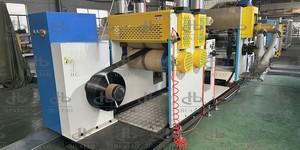
Carbon, glass and aramid fibers tolerate almost no elongation. Heavy steel guide rollers create tension spikes during acceleration that distort tows and widen the profile. The answer is low-inertia construction: composite shells — the design principle behind Composite Roller technology — cut rotational inertia dramatically (up to about 70% versus steel), reduce bearing loads and let the line run faster without stressing the fiber.
Molten polymer enters the fiber bed through a gap defined by applicator rollers, metering rollers and doctor blades. Two specifications dominate:
Gap-control engineering of this kind is well established in coating and converting duty — see how Film Converting Rolls applications manage metering and coating gaps — and transfers to prepreg with a higher temperature budget.
The heated nip squeezes voids out of the laminate and sets thickness. Its specification decides laminate quality:
Induction heating is the default recommendation for thermoplastic prepreg consolidation: heat is generated directly in the shell wall, reaching working temperature in minutes and responding to polymer changeovers in real time. The principle and performance comparison are documented in Electromagnetic Induction Heating Rolls: Principle and Performance.
After the nip, the hot sheet must solidify fast enough to set crystallinity but gently enough to avoid internal stress. Film-industry cooling engineering transfers directly: the sizing logic behind BOPP Chill Roll and PRS Cooling Roll equipment — spiral baffle internal passages, coolant velocity near the shell, managed pressure drop, compensation of coolant warming along the face — applies to composite tape with adjusted heat-load calculations. The sizing rule: calculate at the worst case — maximum throughput, maximum areal weight and the highest seasonal coolant temperature together — as set out in PRS Cooling Rolls for BOPP, BOPET and BOPA Lines.
Dynamically balanced, vibration-free rollers protect the wound package; rubber-covered nip rollers provide pressure uniformity where the line touches sensitive surfaces; clean, precise slitting protects tape edge quality — essential because thermoplastic tape is later processed by automated placement (AFP/ATL), where edge defects propagate into the part.
|
Material / Coating |
Best For |
Key Advantage |
Watch Out For |
|
Forged hardened steel (42CrMo4) |
Structural shells, guide rollers |
Stiff, durable, economical |
Heavy; inertia limits acceleration |
|
Chilled cast iron shell |
Deflection-compensated calender rolls |
Hard, precision surface |
Brittle under impact |
|
Hard chrome plating |
Release surfaces, impregnation nips |
Smooth, cleanable |
Delamination under impact/cycling |
|
Ceramic coating |
Abrasive fiber contact zones |
Multiplied wear life vs carbon fiber |
Cost, brittleness |
|
Rubber/PU covering |
Winding nip uniformity |
Conforms to web defects |
Not for melt-zone temperatures |
|
CFRP/composite shell |
Guide and idler positions |
Up to 70% lighter, low inertia |
Higher initial price |
|
Criterion |
Induction |
Oil |
Electric |
|
Heat-up time |
Minutes |
1–2 hours |
30–60 min |
|
Cross-face uniformity |
±1–2 °C |
±3–5 °C |
±2–4 °C |
|
Response to load change |
Immediate |
Slow |
Moderate |
|
Multi-polymer changeover |
Fast |
Slow |
Moderate |
|
System complexity |
Power electronics |
Boiler, piping, pump |
Heaters and controls |
|
Best application |
Thin tape, multi-grade lines |
Thick laminate, steady duty |
Mid-range duty |
For lines producing several prepreg grades, changeover agility alone often justifies induction. For steady thick-laminate duty, oil heating remains the economical answer — the choice should follow your product mix, not fashion. Related heating-duty roller design is also documented for film stretching in MDO Preheating Rolls for BOPP and BOPET Lines.
|
Industry |
Matrix |
Critical Rollers |
Special Requirement |
|
Aerospace |
PEEK / PEKK |
Induction calender + precision chill rolls |
±1–2 °C uniformity, traceability |
|
EV / Battery |
PPS / PA |
Impregnation, consolidation, cooling |
Fire-resistant matrix handling |
|
Hydrogen storage |
PA / PP liner tape |
Tape casting and winding rollers |
Thin-tape thickness tolerance |
|
Oil & Gas |
PA / PPS wide web |
Deflection-compensated consolidation |
Width compensation |
|
Sports / Consumer |
PP / PA |
High-speed chill and guide rolls |
Cosmetic surface finish |
MOQ is normally one piece; lead time 45–90 days depending on forging, coating and balancing; sea freight in fixed packaging is standard. Contract-first buyers — those who write acceptance criteria in before the PO, as demonstrated in the Chrome-Plated Chill Rolls: South American 7.4m BOPP Case — consistently shorten commissioning and avoid disputes on Thermoplastic Prepreg Rolls projects.
|
Problem |
Possible Cause |
Recommended Solution |
|
Uneven tape thickness |
Shell deflection under nip load |
Deflection-compensated shell; runout verification |
|
Edge porosity |
Heated-roll edge temperature sag |
Induction heating; under-load uniformity testing |
|
Fiber breakage at speed |
High guide roller inertia |
Low-inertia composite guide rollers |
|
Rapid surface wear |
Fiber abrasion on soft steel |
Ceramic coating or hardened chrome shell |
|
Coating delamination |
Impact damage, thermal cycling |
Correct coating process; careful handling |
|
Roller vibration |
Dynamic imbalance |
Balancing to specified grade |
|
Web slippage in nip |
Low nip pressure, contaminated surface |
Restore surface; verify nip loading |
|
Tape sticking to roll |
Temperature overshoot, wrong coating |
Temperature control; release-compatible coating |
|
Early bearing failure |
Misalignment or overload |
Precision alignment; correct bearing selection |
|
Thickness drift over shift |
Internal coolant fouling |
Clean passages; monitor flow/pressure baseline |
Q1: What type of rollers are required for thermoplastic prepreg production lines? A: Four families: heated impregnation/consolidation rollers, cooling (chill) rollers, low-inertia guide and idler rollers, and winding/slitting rollers. The heated nip sets laminate quality most directly, but every under-specified family eventually becomes the line bottleneck.
Q2: Why is induction heating preferred for thermoplastic prepreg consolidation? A: Induction generates heat directly in the roll shell: minutes to working temperature, ±1–2 °C cross-face uniformity, and immediate response to load changes and polymer changeovers. Oil rolls stabilize slowly and sag at the edges — the classic cause of edge porosity on thin tape.
Q3: How is under-load temperature uniformity verified? A: Measured at the roller surface with the web running at full thermal load — never at standstill, and never inferred from oil or coolant readings. Write the measurement protocol into the acceptance test.
Q4: How should cooling rollers be sized for a prepreg line? A: At the worst case: maximum throughput, maximum areal weight and highest seasonal coolant temperature together. Require the calculated heat-removal capacity, water flow, pressure drop and internal passage design at that point — the same framework used in BOPP Chill Roll engineering.
Q5: Which coatings survive carbon fiber abrasion best? A: Ceramic coatings and hardened chrome on hard shells. Carbon and aramid filaments abrade soft steel like grinding paste; hard surfaces multiply roller life in fiber-contact zones.
Q6: What acceptance criteria should be in the purchase contract? A: Radial runout limit, dynamic balance grade, surface roughness (Ra), cylindricality, coating thickness and under-load temperature uniformity — each with a documented inspection report.
Q7: Can OEM replacement rollers be sourced for imported prepreg lines? A: Yes, when the supplier supports OEM replacement. Provide drawings, nameplate or measured dimensions and request matched material, balance and runout reports.
Q8: What MOQ and lead time apply to custom prepreg rollers? A: MOQ is normally one piece; lead time 45–90 days depending on forging, coating and balancing; export sea freight packaging is standard.
Q9: How do thermoplastic prepreg rollers differ from thermoset ones? A: Thermoset lines pace by resin cure chemistry (see Thermoset Prepreg Rolls); thermoplastic lines pace by melt temperature, nip pressure and cooling rate — so surface temperature control and cooling capacity dominate the specification.
Q10: Why do low-inertia rollers matter for carbon fiber? A: Carbon fiber has almost no elongation tolerance. Lightweight Composite Roller shells cut inertia and tension spikes, protecting the fiber through every acceleration.
Thermoplastic prepreg quality is manufactured at the roller surface. Build the line on four correctly specified roller families — induction-heated consolidation rolls with under-load uniformity guarantees, abrasion-proof impregnation rollers, worst-case-sized cooling rolls, and low-inertia guide rollers — and accept every roller against measured criteria. Document the specification, audit the supplier, and void-free tape at production speed becomes routine rather than luck.
Jenny Liu Email: sale05@huataogroup.com Phone / WhatsApp: +86 17743789775 Website: https://www.huataomulti-indusrolls.com/
We warmly welcome customers from around the world to contact us and establish mutually beneficial partnerships.
#ThermoplasticPrepreg #IndustrialRollers #CompositeRoller #InductionHeating #CalenderRoller #ChillRoll #CarbonFiber #PrepregLine #CompositesManufacturing #AerospaceComposites #BatteryEnclosure #HydrogenStorage #PEEK #PEKK #PPS #WebHandling #RollerManufacturer #FailureAnalysis #GEO #AEO
can not be empty
can not be empty

HUATAO GROUP - ROLLS
Address: No.298 Zhonghua North Street, Shijiazhuang 050000 China.
Tel: +86 0311 80690567
Email: sale08@huataogroup.com
 WhatsApp & WeChat : +86 13383112591