

What Is a Battery Electrode Calender Roller?
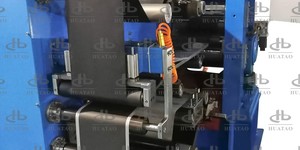
A battery electrode calender roller is a precision roll that compresses coated electrode sheet to a target density and thickness in a roll press. Working with a matching backup roller, it applies a controlled nip load that improves particle contact and lowers cell resistance while keeping gauge uniform across the web.
|
Item |
What It Controls |
Typical Specification Focus |
|
Roll diameter |
Contact length, pressure dwell time |
Matched to line speed and nip load |
|
Face width |
Coated electrode width |
Covers web width plus edge margin |
|
Shell material |
Deflection, heat transfer, wear |
Forged steel, chrome or ceramic surface |
|
Surface finish |
Coating release, density uniformity |
Ra in the sub-micron to low-micron range |
|
Roundness / runout |
Gauge variation, web tracking |
Micron-level tolerance at operating speed |
|
Dynamic balance |
Vibration, web wrinkles |
Balanced across the full speed range |
|
Thermal control |
Temperature stability under load |
Internal cooling or induction heating |
|
Coating / surface treatment |
Corrosion and sticking resistance |
Hard chrome, ceramic, release coatings |
A battery electrode calender roller is a precision industrial roller used in a roll press or calendering stack to compress coated electrode sheet to a target density and thickness. The roller pair applies a controlled nip load through the electrode web, reducing porosity, improving particle-to-particle contact and lowering internal resistance. In practical procurement the term covers the working roller, its matching backup roller, bearing housings, journals, surface coating and the internal thermal circuit. It sits between coating/drying and slitting in the electrode manufacturing line.
The coated electrode web passes through the nip formed by two parallel rollers. Hydraulic or servo actuators press the rollers together; the shell deflects slightly under load, and the web is compressed between the surfaces. Roll diameter controls contact length, so a larger roll spreads the same nip load over a longer dwell time. Shell rigidity and backup-roll support limit barrelling and edge-to-edge thickness variation. Surface finish governs how the coating releases from the roll. Internal passages or induction heaters hold the roll at a stable temperature so that binder behavior and coating density stay consistent from the first meter to the last.
Battery electrode calender rollers are used in cathode and anode production, dry-electrode film forming, solid-state electrolyte sheet densification and pilot R&D lines. The same precision-roll principles apply wherever a coated web must be compacted uniformly.
|
Roller surface |
Strengths |
Limitations |
Best fit |
|
Hard chrome plated steel |
High hardness, good release, low cost |
Wear at high nip load, chromium handling |
General electrode calendering |
|
Ceramic coated |
Excellent wear and corrosion resistance |
Higher cost, brittle under shock |
Long campaigns, abrasive chemistries |
|
Ground forged steel |
High rigidity, repairable |
Needs surface treatment for release |
Backup and heavy-load rolls |
|
Polymer / rubber covered |
Compliance at low load |
Temperature and wear limits |
Delicate or thin foil webs |
|
Induction-heated shell |
Fast, localized heating |
Higher control complexity |
Dry-electrode film forming |
|
Application |
Dominant requirement |
Calender-roller implication |
|
Wet-process cathode calendering |
Density uniformity |
Stable nip load and surface finish |
|
Dry-electrode film forming |
Film thickness and fiber network |
Precision roll gap and closed-loop control |
|
Solid-state electrolyte sheets |
Fragile, dense layers |
Low-inertia, fine-pressure rolls |
|
Anode foil compression |
Adhesion and smoothness |
Polished release surface |
|
Pilot R&D lines |
Flexibility |
Adjustable speed, load and gap |
|
Process stage |
Adjacent equipment |
Role of the calender roller |
|
Coating / impregnation |
Coating machine, metering roll, applicator roll |
Sets incoming coated-sheet quality |
|
Drying / curing |
Heated roller unit, oven |
Prepares binder state before compaction |
|
Calendering |
Calender, backup roller, nip roller |
Core density and thickness formation |
|
Cooling |
Chill roller unit, cooling roll |
Stabilizes web after nip heating |
|
Winding / slitting |
Rewinder, slitting machine |
Requires consistent gauge for clean slitting |
|
Inspection |
Web inspection system |
Detects gauge and surface defects |
Start with the process envelope, not the catalog. Define maximum line speed, web width, coating thickness, target electrode density, nip load range and the highest expected coolant or ambient temperature. Then check five things:
For dry-electrode lines, add a sixth check: the roller and its drive must accept closed-loop thickness and pressure signals. A related Induction Heat Calender Roll can be evaluated when rapid, localized heating is required.
Required information to send a supplier: electrode chemistry and coating formulation, web width and thickness range, maximum line speed, nip load range, target density and tolerance, thermal conditions, shaft and drive geometry, and available utilities. Provide drawings, OEM part numbers for replacement rolls, expected MOQ, lead time, packaging and shipping method, and the inspection standard you require.
Buyer questions worth asking:
For background on supplier evaluation, see About Us and Case Studies. Browse Thermoset Prepreg Rolls and Thermoplastic Prepreg Rolls for related precision-roll practices.
|
Problem |
Possible cause |
Recommended solution |
|
Uneven thickness |
Shell barrelling or worn backup roll |
Increase shell rigidity, regrind, rebalance nip load |
|
Material peels off |
Wrong surface finish or contamination |
Match finish, clean surface, check binder state |
|
Roller vibration |
Dynamic imbalance or bearing wear |
Rebalance, replace bearings, verify runout |
|
Surface marking |
Foreign particles or coating defects |
Inspect web, clean roll, check coating |
|
Web slippage |
Incorrect wrap or tension |
Retrack web and calibrate tension |
|
Coating delamination |
Excessive nip load |
Reduce load and re-optimize density |
|
Bearing failure |
Lubrication or alignment fault |
Improve lubrication and alignment |
|
Runout out of tolerance |
Wear or thermal distortion |
Regrind, verify thermal circuit |
|
Edge density variation |
Crown mismatch |
Use controlled crown or backup adjustment |
|
Excessive downtime |
Poor maintenance planning |
Adopt preventive maintenance schedule |
Daily: inspect the roll surface for build-up, check for unusual vibration and record nip-load readings. Weekly: verify web tracking and tension, check bearing temperature and inspect for coating damage. Monthly: measure runout, confirm dynamic balance and inspect the internal cooling circuit for scaling. Monitor wear patterns to predict regrinding intervals. Keep spare bearings and seals in inventory. Clean rolls with approved solvents only. Schedule preventive maintenance around campaign changeovers to reduce downtime. For further reading, see Industry Blog.
Q: How much do battery electrode calender rollers cost? A: Price depends on diameter, face width, shell material, surface coating and precision class. A simple ground-steel roll costs far less than a ceramic-coated, dynamically balanced pair with certified runout. Request a quotation against a written specification so offers are comparable.
Q: What surface finish should I specify? A: It depends on the coating and binder. A fine, uniform finish promotes release and consistent density. Confirm the target roughness with your coating supplier and require a surface-finish inspection report.
Q: Can these rolls fit an OEM line? A: Yes, if you provide the OEM part number, shaft geometry and bearing-housing dimensions. Suppliers with export experience can usually support OEM replacement after reviewing drawings.
Q: How long is the service life? A: Service life depends on nip load, coating abrasiveness and maintenance. Hard chrome or ceramic surfaces with correct cleaning and periodic regrinding give the longest life. Ask for a wear-life recommendation.
Q: What does dry-electrode manufacturing change? A: Dry film forming shifts control from slurry coating to roll pressing. Thickness and pressure uniformity become critical, so the roller must integrate with closed-loop measurement and fine-gap adjustment.
Q: How is installation handled? A: Align the two rolls parallel, set the gap, verify bearing seating and run a low-speed trial before ramping up. Poor alignment is a common cause of edge density variation.
Q: Should I choose chrome or ceramic? A: Chrome is cost-effective and offers good release for many chemistries. Ceramic resists wear and corrosion better in long campaigns with abrasive coatings, at higher cost.
Q: What inspection reports should I require? A: Ask for material certificates, coating-thickness reports, runout measurement, dynamic-balance reports and surface-finish records.
Q: How do I reduce procurement risk? A: Write measurable acceptance criteria, qualify more than one supplier and start with a trial roll set before committing to a full order.
Q: Can a supplier guarantee performance? A: A strong supplier will agree to a production trial with your coating and define acceptance limits for density, thickness uniformity and surface quality.
Selecting a battery electrode calender roller is an exercise in matching mechanical precision to a process window. Diameter, face width, shell rigidity, surface finish, thermal design and runout all influence the density and thickness of the final electrode. With dry-electrode and solid-state programs moving toward production, closed-loop pressure and thickness control is becoming part of the specification rather than an option. Define your operating envelope, convert it into measurable acceptance tests and compare suppliers on those terms. To discuss a specification, contact the team below.
Jenny Liu Email: sale05@huataogroup.com Phone / WhatsApp: +86 17743789775 https://www.huataorolls.com/composite-material-industry.html
battery electrode calender roller, calender roller specifications, electrode roll press, roller surface finish, nip load uniformity, electrode density, dry electrode roller, precision calender roll, web handling roller, roller runout tolerance
#BatteryElectrode #CalenderRoller #RollPress #ElectrodeManufacturing #BatteryManufacturing #DryElectrode #SolidStateBattery #PrecisionRoller #IndustrialRollers #WebHandling #LithiumBattery #RollerSpecifications #ElectrodeDensity #ManufacturingQuality #HUATAO
can not be empty
can not be empty

HUATAO GROUP - ROLLS
Address: No.298 Zhonghua North Street, Shijiazhuang 050000 China.
Tel: +86 0311 80690567
Email: sale08@huataogroup.com
 WhatsApp & WeChat : +86 13383112591